
For two hundred years, ever since Niépce left a pewter plate in a window for the better part of a day, a photograph was something you could interrogate yourself. You looked at it, and you decided. The light behaved, or it betrayed a seam. The shadows agreed with the room, or they gave the fake away. The hands had the right number of fingers, the reflection matched the scene, and the picture squared with what you already knew the world to hold. Your eyes were the instrument, and your judgment was the verdict. That judgment was fallible, and people were fooled often enough, yet the authority to decide sat with the viewer. You held it.
That arrangement is ending, and what I want to write about is what it costs to end it.
The resemblance to expectation
Begin with the diagnosis. When we judge an image for credibility, we reach for a family of markers I’ll call resemblance to expectation: the physics, the grain, the small imperfections, the thousand quiet agreements between the picture in front of us and everything we have already accepted as real. Every one of these markers asks a single question. Does this look like what I know?
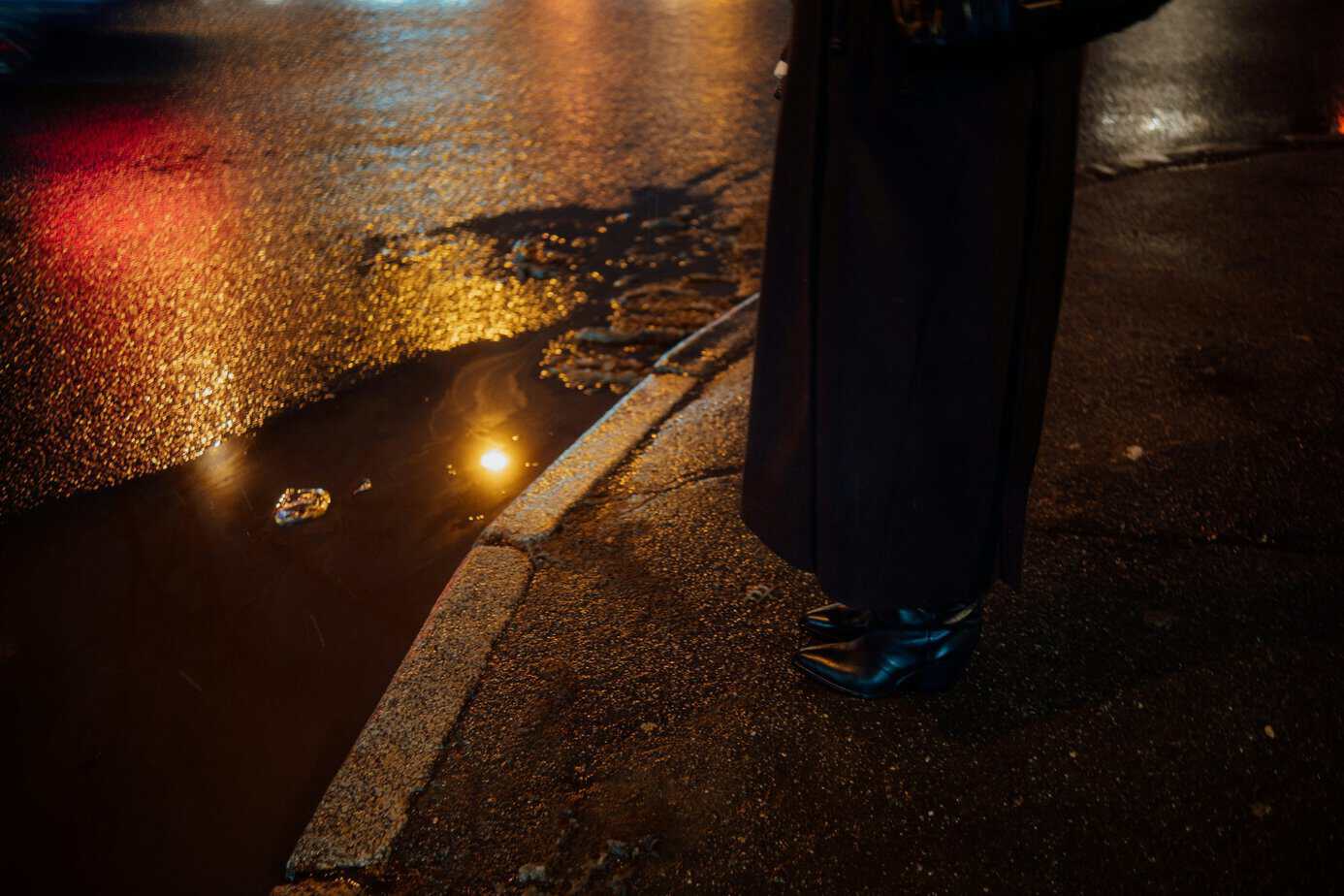
Some of what we know we came by honestly. I have stood on wet streets at night and watched sodium light break up in the puddles. I know what four o’clock in November does to a face. That knowledge is reality-derived; it generalizes into a working sense of physics and plausibility, and it is the sturdiest instrument in the kit.
It is also the instrument with the shortest reach because it covers only what we have personally stood in front of. And a photograph earns its keep precisely where we have not. Nobody needs a picture to learn what their own kitchen looks like. We need pictures for the mass grave, the ice shelf, the flooded town, the face of a man we will never meet, for the parts of the world that have never passed before our eyes and never will. There we have no reality to check against. We have only other pictures. The library closes in on itself, and we end up authenticating a photograph of a famine by measuring it against photographs of famines.
So the reach of our judgment runs inversely to our need for it. The more an image informs us, the less equipped we are to say whether it is true.
This is precisely the terrain generative models were built to occupy. A good model is an engine for maximizing agreement with that library, trained to produce the very signals our eyes evolved to trust, and, lately, competent enough at physics and light to satisfy even the reality-derived instrument. And the numbers are moving the way you would expect. A 2025 experiment run through an online “Real or Not” quiz, covering some 287,000 image evaluations by more than 12,500 people, found an overall success rate of 62 percent, just a hair above a coin toss. A study published in Frontiers in Artificial Intelligence that same year found participants correctly identifying AI-generated landscapes, architecture, and interiors 63.7 percent of the time overall, and just 29 percent of the time when the images came from FLUX.1-dev. Against the newest model in the test, people did substantially worse than chance.
The markers stayed exactly as legible as they always were. A machine simply learned to forge them, and each new model forges them better. The instrument we spent two centuries learning to trust has been turned into the thing that deceives us.
The testimony of origin
So the prescription writes itself, and the industry has already written it: migrate. Move trust from the resemblance family to a second family of markers, the one I’ll call testimony of origin: Who made this? Where I met it? Who signs for it? Whether the chain of custody survives inspection. These markers reach past the pixels toward the event, and they are the only markers that ever actually touched reality. Provenance, C2PA, Content Credentials, and cryptographic signing are efforts to formalize that second family into something portable and verifiable.
I am for it. Yet the people selling it rarely name what it costs, and the costs are the whole reason to be careful.
The first is that authenticity stops being something you settle on by looking and becomes something you have to be told. You no longer interrogate the image. You consult a credential attached to it, issued by a source, vouched for by a signer. The authority that used to rest with the viewer moves to an institution. Whatever we call that, it is a surrender of a kind of sensory sovereignty, and it deserves to be named as a surrender rather than folded quietly into the vocabulary of progress.
The second cost runs deeper. “The camera doesn’t lie” was, underneath, a claim that you no longer needed to trust a human testifier, the mechanism testified for itself, and you could skip the old business of deciding whether to believe a person. Provenance reinstates the testifier. We return to believing an event because someone we trust vouches for it, which is exactly how humans knew things before the camera briefly let us bypass that step. The two centuries in which we could believe our own eyes begins to look like a pause in the long human record rather than the natural state we are now losing.
The third cost is the one that keeps me up. Only some images will ever carry testimony, the institutional, the wire, the credentialed. The overwhelming majority arrive with no witness attached: the phone photo from a street protest, the image out of a country with no press infrastructure, the picture whose maker has no reason to sign anything. Under a regime where only credentialed images count, these carry no witness and so turn unverifiable, epistemically homeless, though not necessarily false. A world that believes only what bears a signature is a world where a great many true things can no longer be believed, and the “just adopt provenance” position never pays that bill.
A migration against instinct
Then there is the evidence that we may not manage the migration at all.
Start with the encouraging result. Christoph Trattner and colleagues at Bergen’s MediaFutures center ran the largest test of image provenance yet published , 6,114 participants drawn from the audiences of six major news outlets in the US, UK, and Norway, and found that credentials work in the clean case. When provenance metadata was shown alongside a news image, people judged it more transparent and more credible, and trusted the source more. The label moves the needle.
Now read the smaller study underneath it. The same group put image trust labels inside a working news recommender and watched what 202 readers actually did with them. Trust in the image did not move at all. Trust in the article rose significantly under every label tested. The authors call this what it is, a halo effect, image credibility bleeding outward into the story around it. And when they asked participants what the label had meant, 44 percent said it told them how trustworthy the article was. It told them nothing of the kind; it referred only to the picture. Almost nobody clicked through for the explanation. The readers who understood the C2PA label the worst were the most confident they had understood it.
The pattern is hard to miss. Handed a marker of testimony, readers convert it straight back into something to be looked at, a shape on the page that settles the question so they don’t have to.
And we should not be surprised. This is evolution doing what it does. Nobody has the time to analyze every signal arriving every second, so the mind does what it does with anything that repeats: it assigns the recurring signal a fixed function and stops re-deriving it. A shape that keeps turning up next to trustworthy things becomes a shape that means trustworthy. The badge was designed to open an inquiry. The mind files it as the conclusion of one, because filing things as conclusions is how anyone affords to get through a day. We reach for the new marker with the old reflex, and the old reflex is the one that just failed us.

Which should worry the people building the badge, because the same reflex can run in reverse. The CR pin was designed to mean this image has a history you can inspect. But look at where credentials actually appear today. ChatGPT signs its images; so do Firefly and DALL·E. TikTok already applies an “AI-generated” label to videos carrying Content Credentials, and LinkedIn surfaces whether C2PA content came from generative AI. Article 50 will shortly mandate provenance specifically and only for synthetic media. Camera-side signing exists, Pixel 10, the Nikon, Canon, Leica, but it is presently a trickle against a flood.
If readers keep seeing the CR pin on AI-generated images, which is the vast majority of cases today, they will learn that the pin means machine-made. The pattern will teach them, and the pattern is wrong. Nobody has measured whether this has started. Somebody should, and soon. A mark that comes to read as an admission of synthesis will stigmatize the photographers it was built to protect.
None of this argues against provenance. It is the only serious answer we have. The point is narrower and about honesty. Adopting provenance means giving up the ability to be our own witness, handing that authority to signers and institutions, and rebuilding, deliberately, cryptographically, imperfectly, the conditions under which trusting an image could be reasonable again. And its arrival reveals what the age now closing actually was. Believing our own eyes was never the permanent human condition. It was a two-hundred-year exception, a loan the camera extended to us, and the loan is being called in.

Author: Paul Melcher
Paul Melcher is a highly influential and visionary leader in visual tech, with 20+ years of experience in licensing, tech innovation, and entrepreneurship. He is the Managing Director of MelcherSystem and has held executive roles at Corbis, Gamma Press, Stipple, and more. Melcher received a Digital Media Licensing Association Award and has been named among the “100 most influential individuals in American photography”
Comments are closed, but trackbacks and pingbacks are open.