
The Getty–Shutterstock merger has a real competition problem. It also has no clean remedy.
In June 2026, the UK’s Competition and Markets Authority will render its final verdict on the Getty Images–Shutterstock merger. Based on everything that has emerged from the investigation, the most likely outcome is a yes, but.
Getty and Shutterstock are both close to billion-dollar-a-year companies facing a competitor they cannot outrun. AI-generated imagery can produce any visual at a fraction of the cost of a licensed photograph. In commercial stock photography, the need to license existing content will not decline gradually. Under pressure after years of cheap overproduction, brutally accelerated by generative AI, it will soon approach zero. Editorial is different. AI cannot document that a specific goal was scored, a specific verdict was delivered, or a specific person appeared at a specific event. That demand does not erode the same way, which is why that market has a future, and the CMA knows that.
The CMA’s Concern
This merger, which is in practice an acquisition of Shutterstock by Getty, is a survival move. Combining two businesses into one gives the combined entity the scale, cost structure, and time to figure out where visual content licensing fits into a world that no longer needs stock photography the way it once did. The CMA has a different mandate: protecting UK businesses from the market distortions that come with monopoly control. And on editorial imagery, those two goals are on a direct collision course.

The CMA’s provisional finding is that the combined entity would control close to or above 50% of the UK editorial market. In a segment where barriers to entry are high, the supplier pool is thin, and publishers cannot easily walk away from the two or three agencies covering the full range of events they need, that level of concentration gives the merged company the ability to dictate terms to buyers with nowhere else to go.
Two Very Different Editorial Operations
Getty functions like a traditional news wire with full ownership of its content. It deploys staff and contracted photographers to the events that matter, Premier League fixtures, royal occasions, political events, entertainment moments, under exclusive agreements with leagues, associations, and media organisations worldwide. The images are Getty’s by contract. The institution and the archive are inseparable: one keeps generating the other.
Shutterstock runs the mirror model. Its editorial strength is built on representation, distributing content from partner agencies rather than owning production. Lower cost, but lower margins. The bulk of its editorial offering comes from EPA, SIPA, ZUMA, ABACA, NurPhoto, and others. On the owned side, it acquired Rex Features in 2015 for $33 million, one of the oldest picture agencies in Britain, with an archive spanning 90 years of British public life. In 2022, it acquired Splash News, the entertainment and paparazzi network whose commercial weight is concentrated almost entirely on the UK tabloid market. And in February 2024, it acquired Backgrid for approximately $20 million, a global celebrity news agency formed in 2017 from the merger of three paparazzi agencies, operating in the UK, US, and Australia, adding a further 30 million images and 1,400 contributors to its editorial stack.
Together, Getty’s organically built operation and Shutterstock’s assembled stack of deals, archives, and distribution agreements cover virtually every editorial need a UK publisher has.

Why Shutterstock Is the Obvious Target
The obvious proposition for the CMA would be to ask the merging companies to divest some of their editorial offerings in the UK market.
If someone has to give something up, it is Shutterstock. Distribution partnerships and acquired archives are easier to carve out or unwind than fully owned production operations, and Shutterstock’s editorial business is more separable by design. The CMA is consulting on two options: a narrower divestiture of Splash News and Backgrid, or a broader package that adds Rex Features. Either way, the logic is the same, Shutterstock sheds its UK editorial presence, and competition is nominally restored.
In theory.
The Buyer Problem
Who buys this? The UK editorial landscape is neither a healthy nor a growing market. PA Media, the national news agency and closest thing to an obvious acquirer, also owns Alamy, the marketplace of independent photographers. It is a credible organisation, but acquiring Rex Features, Splash News, and whatever else is included in a divestiture package, at the price Shutterstock would legitimately seek for assets it paid good money to build, is a different proposition than running a wire service. The financial scale required and the operational complexity of absorbing a global entertainment photography network may simply be beyond what PA can or would want to take on.
Beyond PA, the candidate list gets thin fast. The global wire services, AFP, Reuters, AP, have their own structural complications, including the fact that AP is already a party to Shutterstock’s UK distribution arrangement. Private equity has capital, but no particular expertise in running editorial agencies, and editorial photography is not a sector that lends itself to the financial engineering PE firms typically apply. A strategic buyer from outside the traditional photography industry would be entering one of the most structurally stressed media markets in the developed world through a multi-million-dollar acquisition.
That last point is worth dwelling on. The UK press, which is the primary customer base for whatever is being sold, is not in good health. National newspaper circulation has fallen by two-thirds over twenty years. Between 2022 and 2024 alone, average circulation across all national dailies dropped 17.5%. Print advertising revenue, which once subsidised the entire editorial ecosystem, has collapsed. Nearly 300 local newspapers have closed since 2005. The publishers who would be licensing from a divested Rex or Splash are the same publishers cutting headcount, closing titles, and watching their revenue contract year after year.
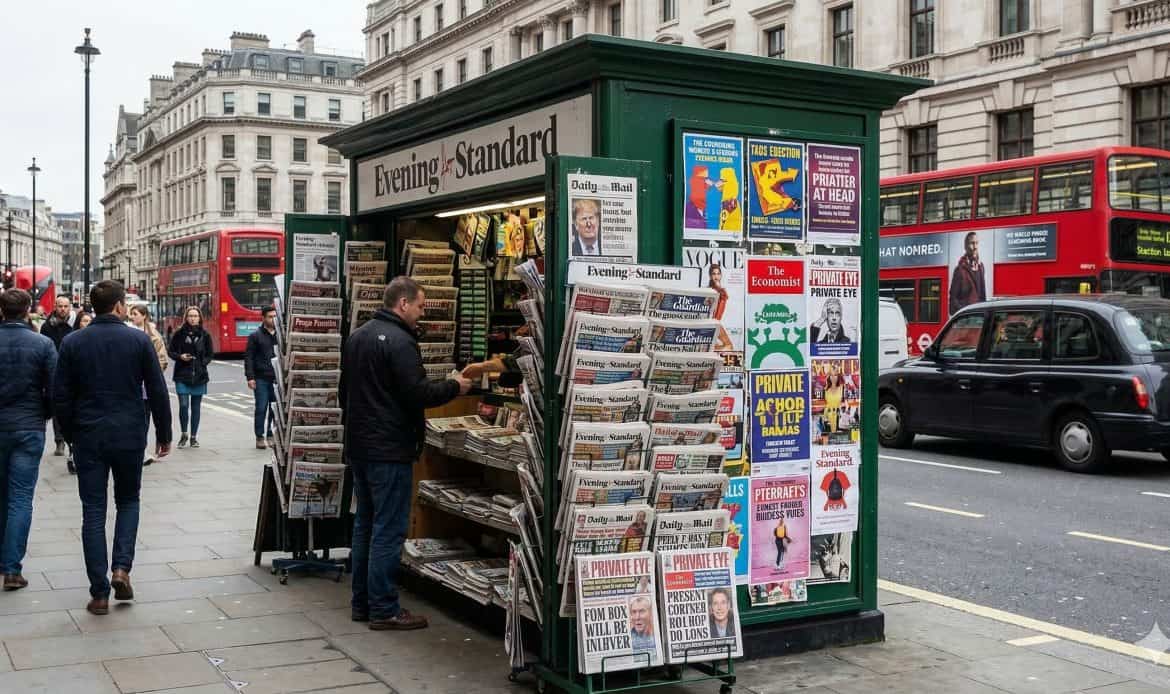
Which raises another issue: What is the CMA really protecting? If those numbers are any real indication, the editorial market is collapsing, and with dwindling buyers, Getty/Shutterstock competition will still suffer losses, regardless of who merges with whom and who controls what. In fact, only a company with sufficient economies of scale would be able to survive in this environment.
The CMA is applying a standard competition framework to a market that may be too far in structural decline for that framework to produce a meaningful outcome. Protecting competition in a shrinking market doesn’t protect the market. It may just slow down the consolidation that could be the only viable response.
The Rights Problem
The CMA’s jurisdiction is the UK. But Rex Features, Splash News, and Backgrid are not UK-only businesses; their content is licensed globally. If Shutterstock is forced to sell these assets to a UK buyer, what happens to the non-UK rights? Does the merged company retain them? Does the buyer receive global rights? Do they split territorially, leaving both parties with a partial asset and a permanent entanglement? None of the three options is clean, and the CMA’s mandate cannot resolve them. Editorial agencies are also organisations, not just archives, photographers, picture editors, and account managers who will choose, after a sale, whether to stay or move to the market’s largest employer.
A Greek Tragedy
The CMA’s concern is legitimate. A merged Getty–Shutterstock with over half the UK editorial market would have pricing leverage over publishers already operating on thin margins. The merger’s survival logic is also legitimate. Two companies doing what they must in a market that AI is reshaping beneath them.
It has the structure of a Greek tragedy: two forces, each acting rationally within its mandate, moving toward a collision that neither chose and neither can fully prevent. And caught between them, an entire industry ecosystem, photographers, editors, agency staff, freelancers, wire services, whose futures depend on a resolution that does not yet exist.
So yes, the CMA will probably say yes. The harder question, but what, exactly, and how, is one the regulator is still working through. The industry is watching because, beyond the UK, the outcome will have a deep impact on editorial photography and photojournalism worldwide.
